
Finding an available healthcare professional can still mean several phone calls, unanswered messages or travelling further than necessary. According to a 2024 BVA/Xsight survey, 11% of patients in France have given up on seeking healthcare simply because they couldn’t get access in time.
clikOdoc is a digital healthcare platform that helps patients access care while simplifying appointment management for healthcare professionals. Founded in Martinique in 2018, the company has a strong base across French overseas territories and is expanding into mainland France and the UAE.
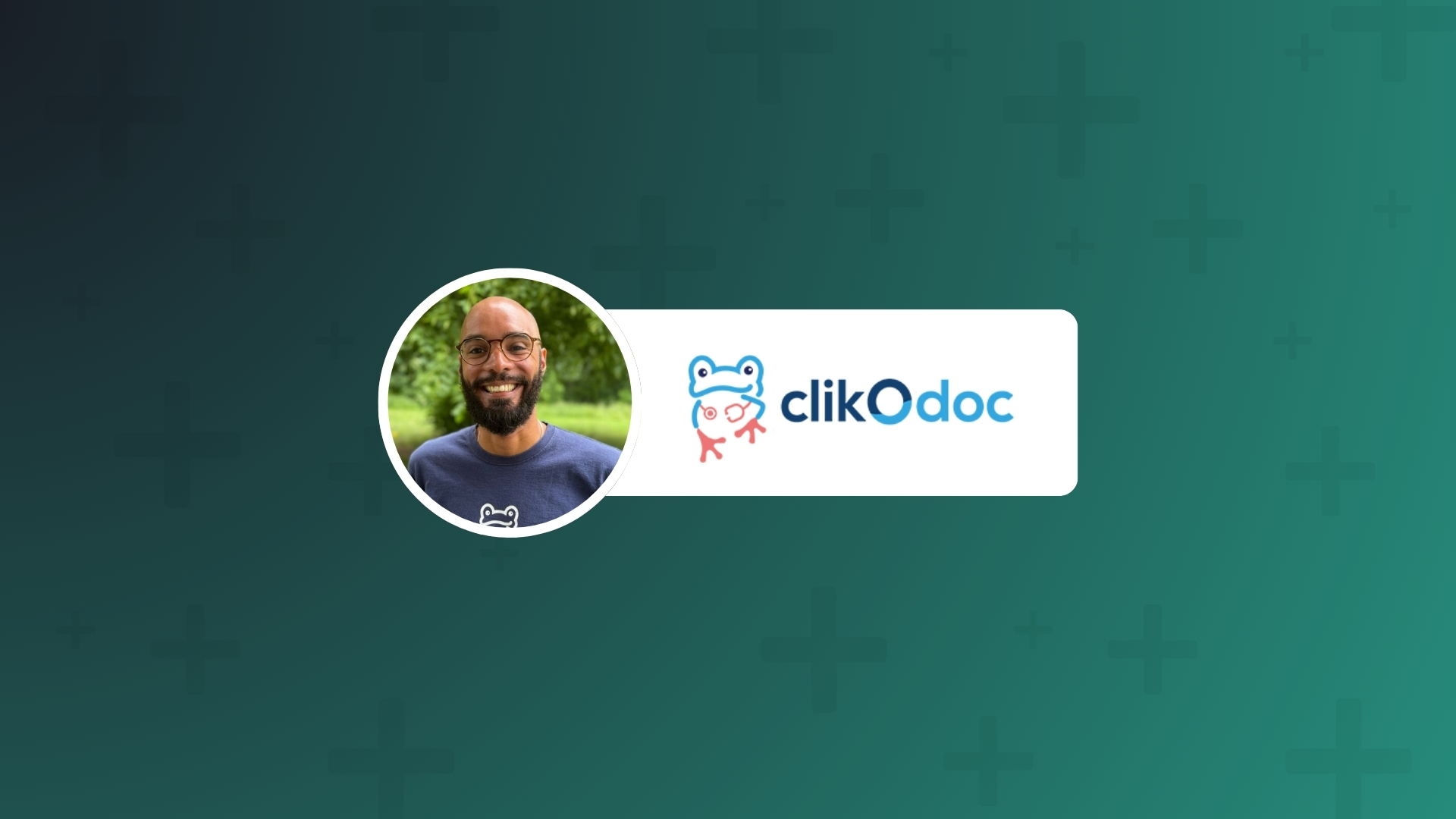
Rodolphe-Emmanuel Hospice is clikOdoc’s founder and CEO. The company started with a concrete problem: his father is an ophthalmologist, and Rodolphe watched him and his secretaries struggle daily with appointment requests, no-shows and patients who couldn’t find an available slot. We spoke about building technology around real problems rather than the other way around.
Can you introduce yourself and tell us about your role?
I’m Rodolphe-Emmanuel Hospice, an entrepreneur from Martinique and the founder and CEO of clikOdoc (clikodoc.com), the digital healthcare platform that helps patient access care while simplifying appointment management and administrative work for healthcare professionals. Founded in Martinique in 2018, clikOdoc has a strong base across Martinique, Guadeloupe, Réunion and Saint-Pierre-et-Miquelon, and is expanding into mainland France and the United Arab Emirates.
My role is to lead the company’s vision and development, while working closely with our teams, healthcare professionals and partners to make sure we’re solving real problems faced in the field.
How did your company come about and what was the motivation behind it?
I founded clikOdoc in 2018, and the trigger was something very concrete: my father is an ophthalmologist, and I watched him and his secretaries struggle every day to manage the sheer volume of appointment requests, no-shows and patients struggling to find an available slot.
What looked at first like an administrative problem turned out to affect both sides at once. Patients were struggling to get an appointment, and healthcare professionals were losing time and capacity they could have spent on care.
That’s the starting point clikOdoc was built on: using technology to make appointment management easier for professionals while making access to care simpler for patients.
The platform grew significantly from there. Online booking came first, but over the years we developed a highly configurable booking engine able to handle complex appointment rules and patient pathways. We then added waitlists, secure document sharing, remote consultations and other tools built around the patient journey.
More recently, we launched clikOrocket, which applies the same logic to home care. Starting with nurses, it connects patients who need care at home with available professionals in their area, instead of forcing patients or their families to call practices one by one. Over time, that approach will be extended to other healthcare professionals providing care at home.
Can you describe your company’s mission and values?
Our mission is simple: make it easier for patients to access care, and make the work around each consultation smoother for healthcare professionals.
That mission also shapes the way we work. We start by understanding what patients and professionals actually experience and listening closely to the people using our platform. Staying close to them keeps us grounded in the realities of healthcare, while our ambition pushes us to turn what we learn into solutions that can scale far beyond the territories where we started.
This is also how we build the product. Feedback from patients and professionals feeds directly into regular product cycles, allowing us to solve concrete problems rather than develop technology in isolation.
What are some of the most pressing social issues that your company is working to address through its technology?
There are two sides to this, and they feed into each other.
On the patient side, finding an available healthcare professional can still mean several phone calls, unanswered messages or travelling further than you should have to. That becomes even more difficult in areas where healthcare professionals are in short supply. According to a BVA/Xsight survey conducted in France in 2024, 11% of patients have already given up on seeking healthcare simply because they couldn’t get access to a professional in time.
On the professional side, healthcare is becoming increasingly digital, but also increasingly fragmented. Professionals often use several different software solutions that don’t communicate properly with each other. That fragmentation creates additional work and ultimately takes time away from patients.
Healthcare already has plenty of digital tools. The problem is that too many of them still work in isolation. clikOdoc is built to connect with the software healthcare professionals already use, so information can move more easily from one step of the patient journey to the next.
clikOrocket is a clear example of what this looks like in practice. A patient leaving hospital with a prescription for home care may have to call several nursing practices one by one to find someone available. With clikOrocket, a single request can reach the available nurses in the area, and when clikOdoc is connected to the hospital’s EHR, that request can be triggered automatically at the right moment with the right information already included.
Our care navigator goes one step further by helping patients understand where to go and what type of care they need, making the healthcare journey easier to navigate from the very first step.
Data security matters just as much. Because we handle sensitive medical information, everything processed through clikOdoc is hosted on HDS-certified infrastructure (the mandatory French certification for hosting health data).
Ultimately, technology should strengthen the human relationship at the heart of healthcare by removing unnecessary friction and giving professionals more time to focus on their patients.
How does your company measure the impact of its work in creating positive change?
We measure our impact by looking at how many patients we help access care, how smoothly they move through their care journey, and how much time we can save healthcare professionals around each consultation.
So far, clikOdoc has facilitated more than 4.5 million appointments for over 1 million patients, and helped healthcare professionals reduce no-shows by up to 70%.
We also look at how our tools help simplify booking and remove time-consuming steps before and after the appointment. Partnerships such as the one we have with Orisha, a software provider for healthcare professionals, help us extend that impact by connecting clikOdoc with software already used by thousands of healthcare professionals.
In your opinion, what impact will technology have in creating a better future?
Populations are ageing, healthcare needs are increasing, and healthcare systems will have to manage more continuity of care for more people without a matching increase in available staff.
Technology can help connect the different steps of care and make the whole journey smoother for both patients and professionals.
That’s also how we think about AI at clikOdoc. We are interested in how technology can help understand a patient’s needs, guide them towards the right care and better orchestrate their journey so that care isn’t lost or interrupted along the way.
Our care navigator is part of that vision. The earlier a patient is guided towards the right care, the better the chance of avoiding more complex and costly treatment later on. It can also reduce the wider impact of illness on work, family life and the people around them.
What advice do you have for other companies looking to use technology for good and create a positive impact in the world?
My main advice would be to start with the problem, not with the technology.
There is always a temptation to use the latest technology simply because it is available, especially today with AI. But technology only creates a positive impact when it solves a real problem for real people.
At clikOdoc, we started by observing very simple frustrations: patients struggling to access care, healthcare professionals overwhelmed by administrative work, and different systems that were not communicating with each other. The technology came afterwards.
And don’t assume you have the right answer from the start. Build something, put it in front of people, see how they actually use it and improve it from there. A lot of what clikOdoc is today comes from doing exactly that over the years.
—
clikOdoc has facilitated more than 4.5 million appointments for over 1 million patients, and helped healthcare professionals reduce no-shows by up to 70%.
You can find out more at clikodoc.com.