
Welcome to Global Good’s Impact Interview series. This series is designed to tell the stories of the people and companies working to drive impact in society.
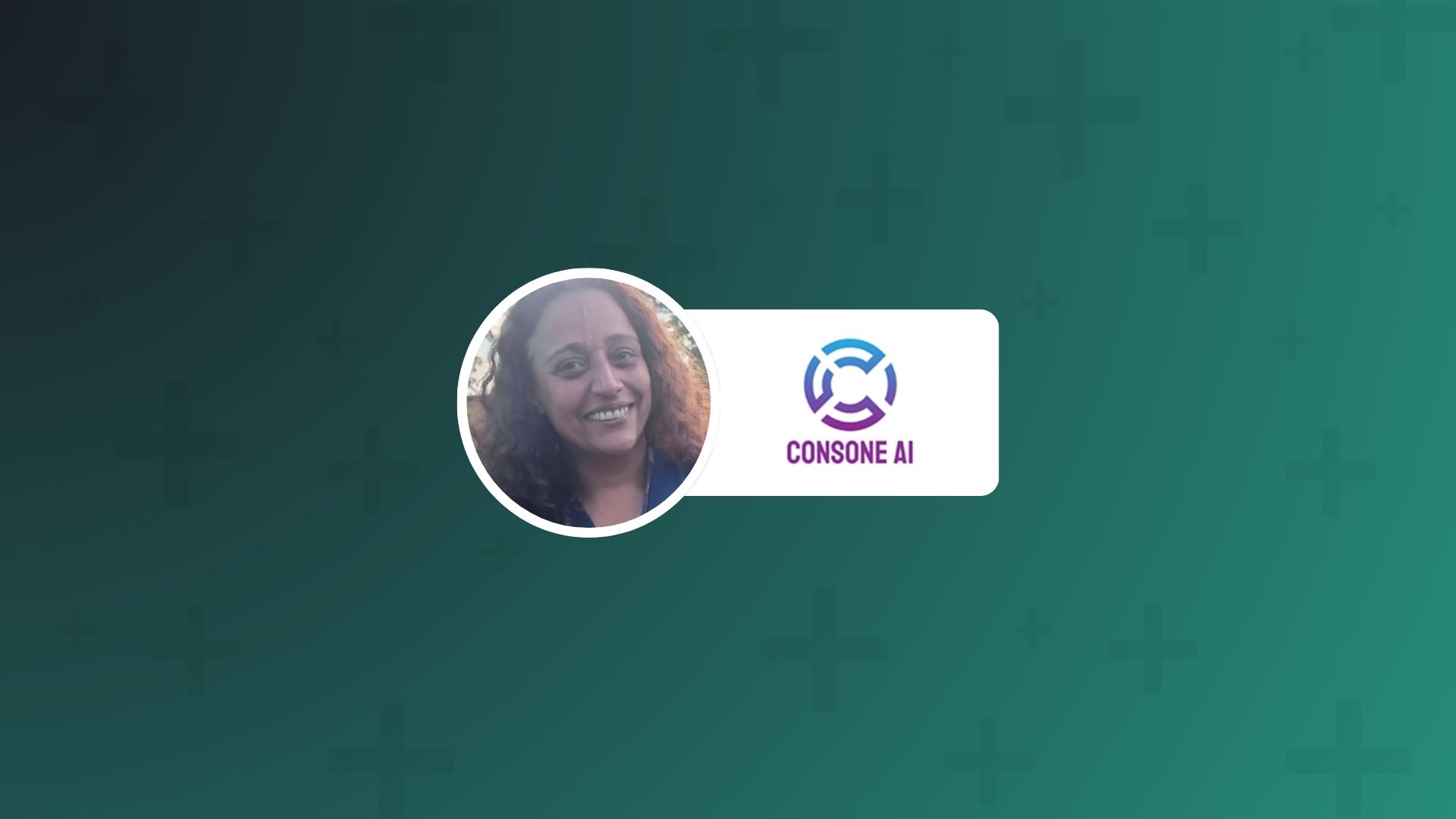
In this edition, we speak with Mo Kosar, Founder and CEO of ConsoneAI — about building AI that predicts drug toxicity across different populations, the personal experiences that exposed how poorly current medicine accounts for biological diversity, and why “we don’t know” should no longer be an acceptable answer when people’s lives depend on better information.
Can you introduce yourself and tell us about your role?
I’m Mo Kosar, CEO and founder of ConsoneAI. My role is to oversee the development of DioScor, our AI-powered decision support tool that predicts drug toxicity across different species and human populations.
Day-to-day, I’m working with our technical team on model validation, engaging with pharmaceutical companies and research institutions like Cancer Research UK and Alder Hey Children’s Hospital, and leading our seed funding round to expand our predictions to account for sex and ethnicity differences.
I’m also the bridge between our technology and the real-world problems it solves. I spent years asking questions nobody could answer about why drug development takes so long, and why medications affect different populations so differently. Now I’m building the tools to answer them.
How did your company come about, and what was the motivation behind it?
My mum was diagnosed with breast cancer while pregnant with me; she had to choose between her life and mine. She was diagnosed with ovarian cancer 26 years later. She had access to a newer drug, but it had taken a decade to develop. She lived 17.5 years with cancer, but was chronically under-medicated because pain relief protocols weren’t designed for South Asian women.
Due to my mum’s history and the fact that I have the BRCA mutation, my daughter was given a cancer drug at five years old for precocious puberty, to reduce her chances of getting cancer later in life. The side effects persist even now, five years after her last dose.
Nobody could tell me why development takes so long, how drugs would affect people like “us,” or what to expect. I kept hearing “we don’t have the data” or “we don’t know.” ConsoneAI exists because those answers aren’t good enough when people’s lives depend on better information.
Can you describe your company’s mission and values?
We’re ending the one-size-fits-all approach to drug development.
Our mission is to accelerate safer drug development while reducing animal testing, with predictions that account for the biological diversity that current models ignore — sex, ethnicity, age.
Our values centre on equity and justice in healthcare. It’s unacceptable that my mum never received adequate pain relief because dosing wasn’t designed for Pakistani women, or that my daughter suffered preventable harm because predictions didn’t account for her mixed heritage. We’re committed to scientific rigour, but we’re also challenging an industry that’s been comfortable with “good enough” when the stakes are people’s lives and quality of life.
What are some of the most pressing social issues that your company is working to address through its technology?
Health inequality sits at the core. Clinical trials rarely reflect the diversity of people who’ll eventually take medications, resulting in drugs that work well for some populations and fail or harm others.
We’re tackling the ten-year drug development timeline — too long when people are suffering now — while addressing the ethical and scientific limitations of animal testing. By enabling pharmaceutical companies to fail fast before expensive trials begin, we help them understand which populations a drug suits best and redesign earlier when needed.
We’re working toward regulatory acceptance of AI predictions with minimal animal data, moving toward a future where drugs are developed with everyone in mind, not just average populations that don’t actually exist.
How does your company measure the impact of its work in creating positive change?
We’ve validated DioScor against drugs already on the market, comparing our predictions to known toxicity data. Currently, our liver, gastrointestinal, kidney, neural, and cardiac predictions achieve 76–86% accuracy against FDA databases.
Pilot user feedback suggests we could reduce carcinogenic preclinical costs from £4 million to £900,000, while cutting timelines from 24 months to six. We will track animals not subjected to testing, failed trials avoided before significant investment, and development time saved.
The real measure of impact will be patients receiving drugs better suited to their biology — fewer people under-medicated like my mum, fewer children experiencing what my daughter experienced. That’s why our discussions with Cancer Research UK and Alder Hey Children’s Hospital matter so much.
In your opinion, what impact will technology have in creating a better future?
AI will enable truly personalised medicine. Instead of developing drugs for an average patient who doesn’t exist, we’ll understand individual risk profiles based on genetics, ethnicity, sex, and family history.
Imagine a doctor saying: your mum had this medication, your toxicity risk increases in this organ, so we recommend this alternative instead. AI can process complexity humans can’t — millions of data points about how different bodies respond to different compounds.
This isn’t replacing clinical judgement; it’s equipping clinicians and scientists with better tools for informed decisions. The future I’m working toward is one where “we don’t know” stops being acceptable, where no parent faces impossible choices with inadequate information, and where healthcare genuinely serves everyone.
What advice do you have for other companies looking to use tech for good and positively impact the world?
Stay connected to why you’re doing this. For me, it’s my mum’s unnecessary pain, my daughter’s ongoing side effects, and every family making decisions without adequate information. That purpose pulls you through inevitable setbacks.
Make your solution real, not theoretical — operational and validated at every step. Get your product into users’ hands early and let their reality guide development. We’re pursuing regulatory approval because real change happens when institutions adopt new approaches.
Finally, balance mission with commercial viability.
Mo’s story is a reminder of how much medical knowledge has been built on assumptions that quietly fail entire populations. The “average patient” at the centre of most drug development has never really existed; they have simply been a statistical convenience that worked well enough for some, and badly for everyone else. The cost of that convenience — measured in inadequate pain relief, unnecessary side effects, and lives constrained by under-medication — has historically fallen hardest on women, people of colour, and children.
What ConsoneAI represents is not a critique of pharmaceutical science, but a long-overdue expansion of it. By treating biological diversity as a design requirement rather than an inconvenient variable, the company is helping to surface a generation of questions the industry has not yet been equipped to answer — and, increasingly, can no longer afford to ignore.
In a sector where progress is often measured in molecules and milestones, the more meaningful metric may turn out to be this: how many people receive medicine that was actually designed with them in mind.
ConsoneAI pitched in the Super Connect Series (AI / #HealthTech) session in early 2026 as part of the global #tech initiatives powered by Empact Ventures in partnership with Global Good