Welcome to Global Good’s Impact Interview series. This interview series is designed to tell the stories of the people and companies working to drive impact in society.
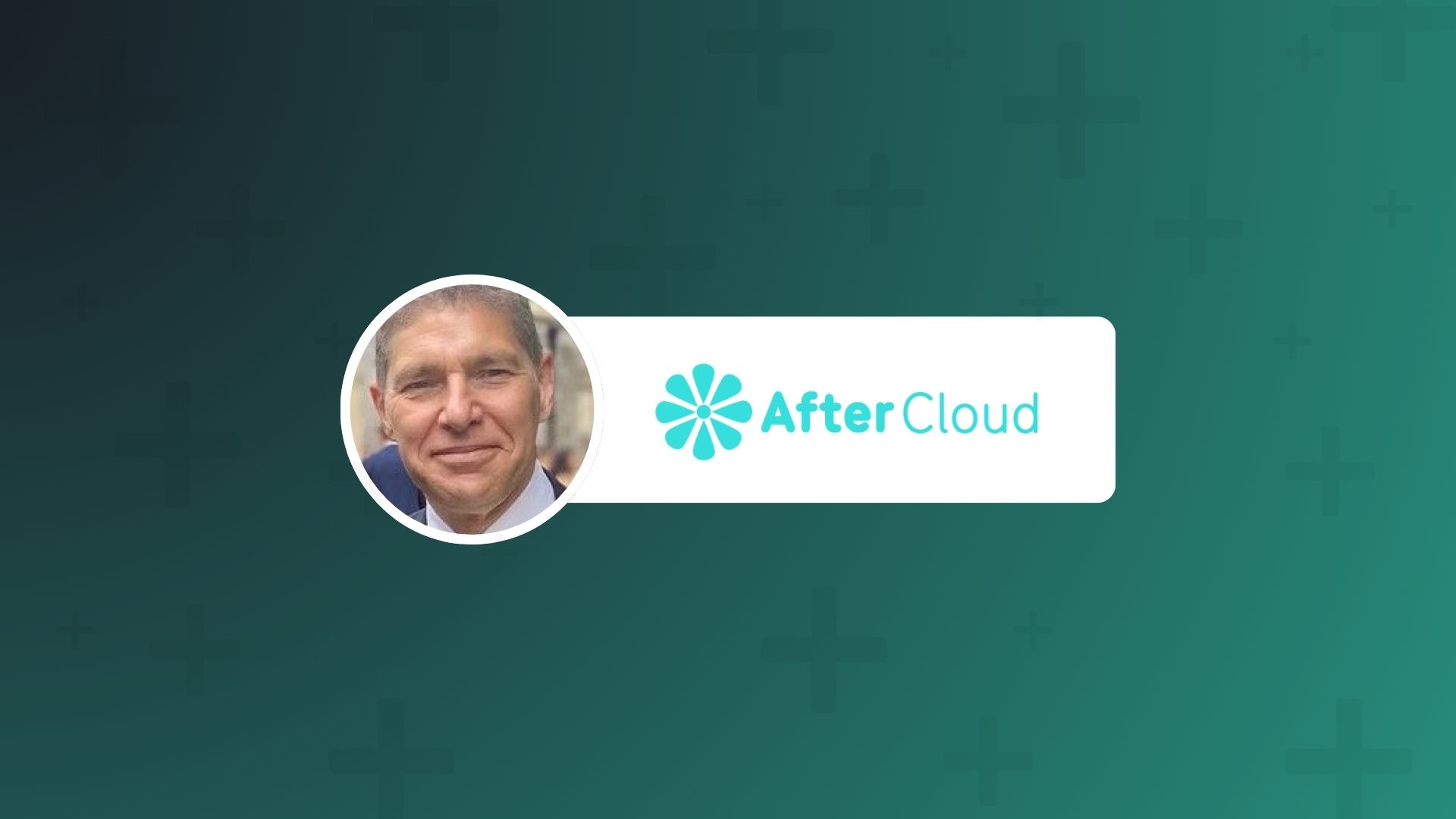
In this edition, we speak with Darren, CEO of After Cloud, about the deeply personal loss that inspired his company, the importance of preserving life stories in dementia and ageing care, and why person-centred technology has the power to fundamentally reshape how we support people in their later years.
Can you introduce yourself and tell us about your role?
I’m Darren, founder and CEO of After Cloud. I’ve spent over thirty years providing technology solutions across health and social care, working with Clinical Commissioning Groups, Local Authorities, private sector organisations, and leading third sector providers.
My day to day role involves leading the business, building and maintaining partnerships, and making sure we continue to exceed the expectations of our customers and collaborators. I also serve as a trustee at Age UK, which keeps me closely connected to the issues facing older people and their families. We’re a small but passionate team, and every one of us is genuinely motivated by the difference our platforms make to real people’s lives.
After Cloud now operates three platforms: Storyteller, which captures life stories for children in care; After Cloud, our digital life story and legacy platform for adults in social care and consumer settings; and Concours, which provides digital provenance for heritage and classic vehicles. Each platform is built on a shared architecture centred on narrative, voice and memory, and each serves communities where preserving personal history has profound practical and emotional value as well as social impact.
How did your company come about and what was the motivation behind it?
In 2019, my mother in law died from a very aggressive form of Lewy body dementia. It was only after the funeral, when the family were going through her possessions and came across a photo album, that we fully understood what had been lost. When someone you love dies, a whole library of information, family history, and lived experience goes with them. It’s gone, and there is no retrieval.
That experience, combined with my background in social care technology, was the catalyst. I knew that most systems supporting the social care sector are top down: strategic, financial, operational. They’re designed for organisations, not individuals. So we set out to build something genuinely person centred, something that could capture a life as it is actually lived and make that story a living, useful resource, not just a memorial.
What we didn’t anticipate was how widely that core idea would resonate. The same instinct that drives families to preserve the story of a loved one with dementia also drives foster families and local authorities trying to maintain continuity for children in care, and classic car owners who want the provenance and history of a beloved vehicle to survive long after the original owner has gone. The human need to preserve story, identity and heritage runs deeper than any single sector.
Can you describe your company’s mission and values?
Our mission is to ensure that no life story, no personal history, and no cultural heritage is lost because the right tools didn’t exist to capture and share it. We build technology that is genuinely person centred, and we believe that social impact is not something you bolt on to a commercial model; it is the commercial model.
Our core values reflect that:
We put the individual first. Every platform we build starts with the person whose story matters, whether that’s a child in care, an adult living with dementia, or someone who spent forty years restoring a classic car.
We are committed to ethical practice and transparency. We work in sensitive settings with vulnerable people, and that demands the highest standards of data stewardship, clinical alignment, and professional integrity.
We believe in collaborative innovation. Our development of Storyteller together with our partner Coram and with Innovate UK support, our voice AI research partnership with the University of Sheffield Speech and Hearing Research Group, and our heritage partnerships through Concours, all reflect our conviction that the best outcomes come from working alongside domain experts, not in isolation from them.
We are unapologetically impact led. After Cloud is an EIS approved business, and we actively seek investors who understand that sustainable commercial returns and genuine social good are not in tension with each other.
What are some of the most pressing social issues that your company is working to address through its technology?
Each of our three platforms addresses a distinct but connected challenge.
Through After Cloud, our adult platform, we are responding to the crisis of identity and continuity in social care. Ageing populations, rising dementia diagnoses, and stretched care services mean that the personal history of individuals in long term care is routinely lost or overlooked. We give individuals and their families the tools to build a digital life story before it’s needed, so that caregivers can deliver truly person centred care, and families have something lasting to hold onto.
Through Storyteller, developed in partnership with Coram, we are addressing one of the most persistent challenges in children’s services: the loss of life story continuity for children in care. When children move between placements, their personal history is often fragmented or lost entirely. Storyteller gives local authorities, social workers, and foster families a structured, sensitive way to capture and carry a child’s story with them, wherever their journey takes them.
Through Concours, we are tackling the less visible but equally real problem of heritage loss in the classic vehicle world. The provenance, the maintenance history, the stories behind significant vehicles, are held in paper documents, private memories, and informal knowledge. When owners die or collections are dispersed, that history more often disappears. Concours creates a permanent, shareable digital record, and we are building this with the active involvement of some of the most respected names in the heritage motoring world.
How does your company measure the impact of its work in creating positive change?
We take measurement seriously across all our platforms. For After Cloud and Storyteller, we work closely with care providers and local authorities to track outcomes aligned with NICE guidelines, using a combination of direct feedback, carer and family surveys, and service usage data. We have active NIHR interest from both Sheffield and North West, and we are working toward formal research programmes that will allow us to evidence impact at scale.
For Storyteller specifically, we are now live with Telford and Wrekin Council on a three year contract, and we have five care organisations actively using our platforms. Eleanor Healthcare Group is rolling out After Cloud across fourteen care homes from July 2026. These relationships give us meaningful, real world data about what works and where we can improve.
We are also an Oxfordshire Business Award Technology Excellence finalist, and we have previously been recognised as Oxfordshire Business Innovator of the Year and by the Archives and Records Association, which reflects external validation of our approach.
In your opinion, what impact will technology have in creating a better future?
Technology has enormous potential to shape a better future, but only if it is built around people rather than processes. The most transformative applications I have seen are the ones that give individuals agency over their own data, their own story, and their own identity.
In social care, AI and voice technology have the potential to fundamentally change how we capture and use personal history, making it possible for people to record their stories in natural, accessible ways even as their abilities change. We are already working with university researchers on voice AI that could eventually help people in the earlier stages of dementia preserve their own narrative.
In heritage and culture, digital platforms can do something extraordinary: they can ensure that the knowledge, stories, and provenance held by individuals and communities survive beyond any single lifetime. That’s not a niche concern. It’s the foundation of how we understand who we are.
At the same time, the responsible development of these technologies matters enormously. Ethical data practices, privacy by design, and genuine co production with the communities you serve are not optional extras. They are the difference between technology that empowers and technology that exploits.
What advice do you have for other companies looking to use tech for good and positively impact the world?
Be clear about who you are building for, and never lose sight of them. It is very easy, especially under the pressures of fundraising and growth, to let the story of the person you set out to serve get squeezed out by the language of metrics and market opportunity. Keep them at the centre of everything.
Build with, not for. Our best product decisions have come from sitting with social workers, care home managers, foster families, and heritage curators, and listening properly. The technology follows the human need; it should never be the other way around.
And if you have an idea that you genuinely believe will make a difference, don’t wait for permission. Be the gamechanger. Fail if you have to, learn from it, and keep going. The problems we are working on are too important for timidity.
–
Darren’s story is a powerful reminder that some of the most meaningful innovations are born not in boardrooms or labs, but in moments of personal loss. The realisation that an entire life of memories can vanish when someone we love dies — and that no system in social care is built to prevent it — sits at the heart of After Cloud’s work. By placing life stories at the centre of dementia and ageing care, the company is challenging a top-down model that has long prioritised process over personhood.
It is also a reminder that responsible innovation, rigorously measured against NICE standards and developed alongside the NHS, has the potential to do something quietly profound: ensure that the people we care for are seen, remembered, and known.
To learn more about After Cloud’s work, visit aftercloud.co.uk.