




Welcome to Global Good’s Impact Interview series. This interview series is designed to tell the stories of the people and companies working to drive impact in society.
Can you introduce yourself and tell us about your role?
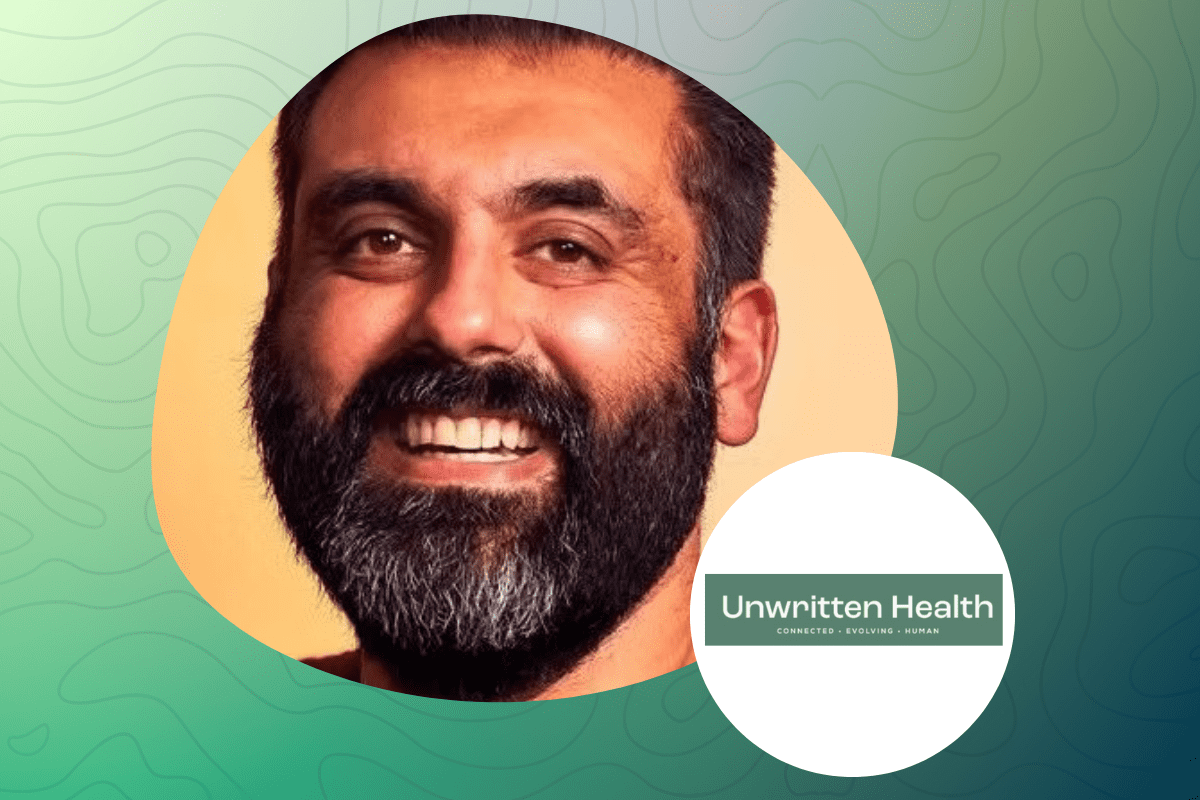
My name is Ashish Rishi, and I am the Founder of Unwritten Health and my role is to set the vision and direction for the company, ensuring that everything we build stays anchored in real lived experience rather than assumptions. I spend my time shaping strategy, working closely with partners and advisors, and translating what we hear from communities into insights organisations can actually use to make better decisions. Unwritten Health sits at the intersection of lived experience, data, and decision-making. My responsibility is to ensure we never lose sight of the people behind the data, while building something that can genuinely influence how healthcare, life sciences, and public sector organisations design services, products, and policy. At this stage, that means leading our pilots, refining the platform, and laying the foundations for a business that can scale without compromising trust or integrity.
How did your Unwritten Health come about, and what was the motivation behind it?
Unwritten Health was born from personal loss. I lost my father to prostate cancer. Had his doctor been better educated on what signs to look for, he might still be here today. Had my father understood his own symptoms earlier, he might still be here today. That experience exposed a deeper, systemic issue. Too many people navigate healthcare without the information, understanding, or support they need, while professionals work within systems that are not designed to recognise difference or nuance. I know my father’s story is not unique. Similar experiences happen every day and will continue to happen unless lasting change is made. That is why Unwritten Health exists. Our purpose is to challenge the norm and reshape how health experiences are understood and designed. We focus on making healthcare more inclusive, equitable, accessible, and empathetic by ensuring lived experience is not overlooked, but actively informs decision-making.
Can you describe Unwritten Health’s mission and values?
Unwritten Health’s mission is to ensure that lived experience is no longer invisible in healthcare decision-making. We help organisations understand the realities people face when navigating health systems, particularly those whose voices are missing from traditional data. By doing so, we support better design, better policy, and better outcomes that reflect the diversity of real lives.
Our values guide how we work and why we exist. We lead with empathy, recognising that behind every data point is a human experience. We value equity, not as a slogan but as a commitment to reducing avoidable disparities through better evidence. We prioritise accessibility, ensuring participation and insight are not limited to those who already know how to navigate the system. And we operate with integrity, building trust through transparency, ethical practice, and responsible data use. Above all, we believe meaningful change only happens when people are genuinely listened to and when their experiences are taken seriously enough to shape decisions. That belief underpins everything we build.
What are some of the most pressing social issues that Unwritten Health is working to address through its technology?
The most pressing issue we address is the gap between real lived experience and the data that drives healthcare decisions. Too often, decisions rely on evidence that does not adequately represent underserved or marginalised communities. This results in services, products, and policies that work well for some but systematically fail others, leading to avoidable inequalities, delayed diagnoses, poorer outcomes, and declining trust in the system. We are also tackling exclusion from participation. Many people are effectively locked out of research and consultation due to language barriers, digital access, health literacy, disability, or past negative experiences with healthcare. When participation is limited to those who already feel confident and included, insight becomes skewed.
Another critical issue is tokenism. Lived experience is often collected as an anecdote or used to validate decisions that have already been made. Our technology elevates lived experience into structured, credible insight that can sit alongside traditional data and be taken seriously by decision-makers. Ultimately, our work is about trust. When people see their experiences genuinely listened to and translated into change, trust begins to rebuild — and that is essential if healthcare systems are to serve everyone more fairly and effectively.
How does your Unwritten Health measure the impact of its work in creating positive change?
We measure impact in three practical ways. First, we assess who is being heard. We track whether our work reaches people typically missing from traditional datasets, including underserved communities, those with lower health literacy, and people with complex or long-term conditions. If representation does not improve, the impact is limited. Second, we measure how insight is used. Positive change only happens when lived experience informs real decisions. We evaluate whether our insights shape service design, research priorities, engagement strategies, or policy discussions, rather than sitting unused in reports. Third, we focus on outcomes and trust. This includes changes in how organisations engage with communities, improvements in inclusion within their processes, and early indicators of better experiences for participants.
Trust is critical; when people choose to stay engaged, it signals that participation feels meaningful rather than extractive. As we scale, we are embedding more formal impact frameworks into our platform, while keeping impact grounded in real-world change rather than abstract metrics. Success for us means better-informed decisions and fewer people feeling invisible within the system.
In your opinion, what impact will technology have in creating a better future?
Technology has the potential to create a better future, but only if designed with intent and responsibility. On its own, technology does not solve social problems. What it can do is remove barriers, surface overlooked insight, and help systems recognise patterns they could not see before. When applied thoughtfully, it can widen participation, deepen understanding, and support better decision-making. In healthcare, technology can help shift focus from averages to realities. It allows experiences to be captured at scale, differences to be recognised, and services to be designed around how people actually live rather than how systems assume they do. There is also a risk that if technology amplifies existing bias or prioritises efficiency over empathy, it can deepen inequality. That is why governance, ethics, and inclusion must be built in from the start. The most meaningful impact of technology will come from how well it helps us listen. A better future is not about more data, but better understanding — and technology should enable that, not replace it.
What advice do you have for other companies looking to use tech for good and positively impact the world?
Start with the problem, not the technology. Be clear about the real-world issue you are trying to address and who it affects, particularly those most often overlooked. Without that understanding, technical sophistication alone will not create impact. Involve the people you aim to serve from the beginning. Co-creation builds relevance and trust and helps avoid solutions that look impressive but fail in practice. Listening early and continuously matters more than retrofitting feedback later. Be honest about trade-offs. Creating positive impact often requires slower decisions, stronger governance, and difficult conversations. That is not a weakness; it is how sustainable change is built. Finally, measure success by change, not attention. Impact is not about headlines, but about whether behaviours, decisions, or outcomes improve over time. Companies using technology for good must be patient, accountable, and willing to challenge their own assumptions. When that happens, technology becomes a tool for progress rather than a distraction from it.
Unwritten Health is part of the Super Connect Series, powered by Empact Ventures in partnership with Global Good.