


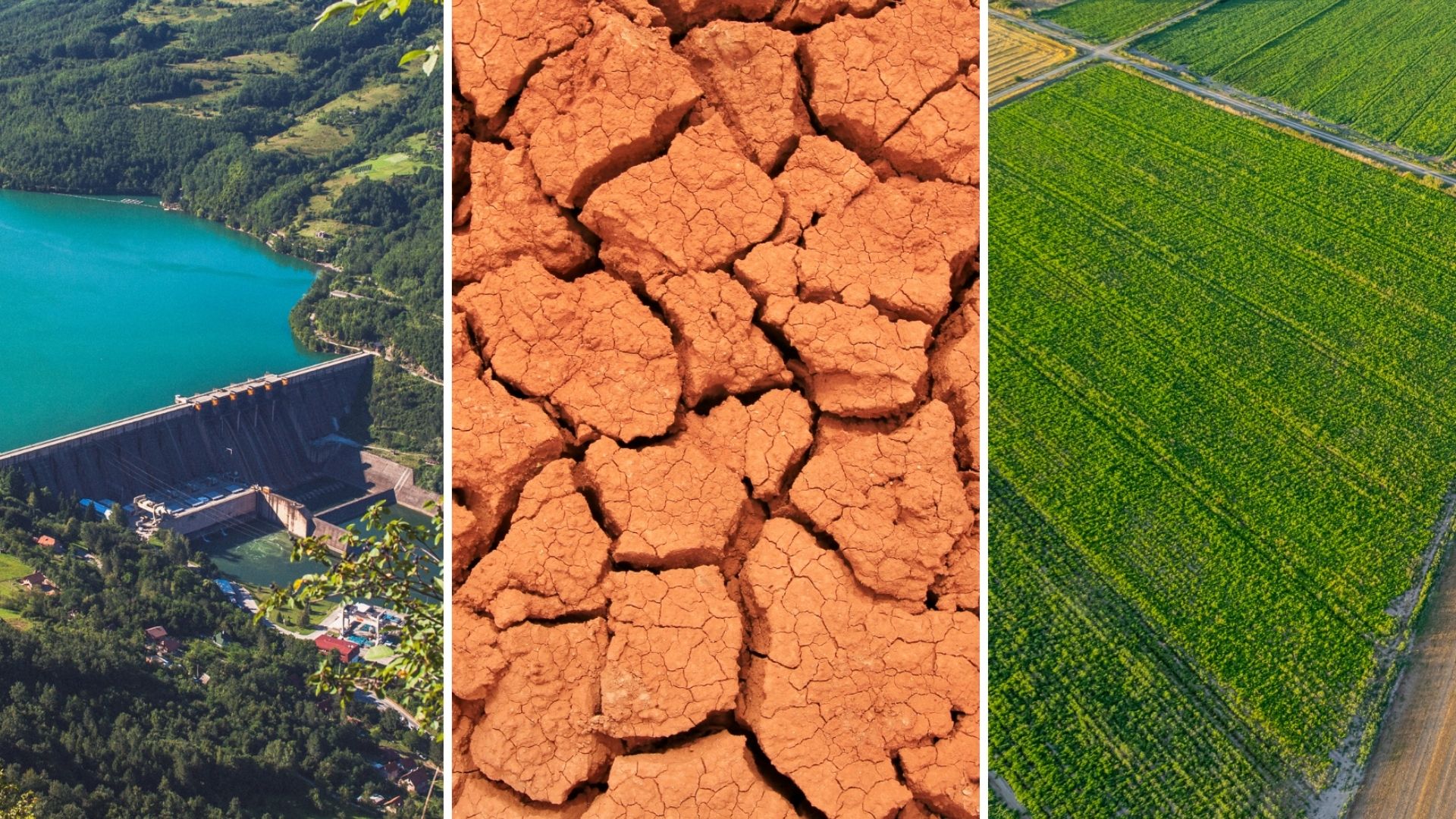
ClimateTech has made real progress in recent years. We see new solutions for clean energy, lower emissions, and smarter use of resources. Innovation is moving fast. Yet one critical element is still missing from many climate strategies: water.
While carbon has become the main focus of climate action, water is what holds energy systems, cities, food production, and public health together. Climate change is already being felt most clearly through water: droughts, floods, and growing water stress that affect billions of people worldwide. When water systems fail, climate solutions often fail with them. Despite this, water is still treated as a side issue rather than a core part of ClimateTech design.
Why ClimateTech Became Carbon-First
There is a clear reason why ClimateTech has focused so heavily on carbon. Carbon is easier to measure, track, and compare. Emissions can be counted, priced, reported, and regulated. This has made carbon the main language shared by governments, investors, and companies.
Water does not fit as easily into this model. It is local and uneven. Too much water causes floods, while too little leads to droughts. The same solution cannot be applied everywhere. This makes it harder to standardise and harder to include in global frameworks.
As a result, many climate strategies address water only after energy systems, infrastructure, or emissions plans are already in place. This approach has enabled rapid progress on carbon reduction, but it has also created a blind spot. A solution can meet its emissions targets and still struggle if there is not enough water to support it.
How Water Determines Whether Climate Solutions Work
Water does not usually cause sudden collapse. Instead, it creates slow pressure. It changes the conditions under which systems operate, often long before failure becomes visible. Most climate solutions are designed around assumptions of stability: stable supply, stable demand, stable conditions. Water challenges these assumptions. Rainfall becomes unpredictable. Groundwater levels drop. Floods arrive more often and with greater intensity. These shifts affect how systems perform day after day, not just during extreme events.
Energy systems show this clearly. Even low-carbon technologies depend on water being available at the right time and in the right place. When water supplies become uncertain, energy production becomes less reliable. In 2022, France had to reduce nuclear power output during a summer heatwave because river water used for cooling became too warm and too scarce. In the western United States, hydroelectric dams regularly operate below capacity due to prolonged drought. These are not outlier events; they are becoming the norm in water-stressed regions, and it is not a problem of emissions, but of design.
The same pattern appears in cities. Climate-friendly buildings, transport networks, and digital infrastructure all rely on water and sanitation systems working in the background. When water systems are under strain, other improvements lose effectiveness. Flood damage or long-term shortages can reverse years of progress in a short time.
Food systems follow the same logic and are especially sensitive. Agriculture depends on predictable water more than any other resource. When rainfall patterns shift or groundwater is depleted, yields fall, costs rise, and livelihoods are affected. California’s Central Valley, which produces a quarter of the food consumed in the United States, has seen groundwater levels drop by hundreds of feet in some areas. Farmers now face a choice: invest in deeper wells at enormous cost, or leave land unplanted. Similar patterns are appearing in India’s Punjab region and across Mediterranean agricultural zones. These impacts are often felt before climate targets are missed, making water stress an early warning signal of broader system failure.
Across the board, the issue is not technology itself. It is the assumption that water conditions will remain stable. When water is treated as a background factor rather than a design constraint, climate solutions become fragile.
Water as a System Constraint
Water is often discussed as a resource to manage. In reality, it is a limit that shapes what is possible; it follows natural cycles and responds quickly to climate pressure. A solution that works in one region may fail completely in another if water conditions are different. Designing without accounting for this variability creates fragile systems.
When ClimateTech strategies assume stable water conditions, they plan for growth without planning for stress. Over time, this leads to solutions that look strong on paper but struggle in real-world environments.
Seeing water as a system constraint changes the conversation. It shifts the key question from simply reducing emissions to asking whether a solution can work where water is already scarce, unstable, or under pressure.
When Water Is Designed In
Despite these challenges, progress is already happening. Some organisations are beginning to place water at the centre of decision-making, rather than treating it as an afterthought.
They measure their water footprint across operations and supply chains, identifying where water stress creates risk. They invest in water restoration projects, recharging aquifers, protecting watersheds, or improving local water access. These efforts make water visible in the same way carbon tracking has, allowing companies to take responsibility for their impact and build more resilient operations.
This shift signals an important change. Designing with water in mind does not slow innovation. It opens the door to more resilient systems and more responsible ways of growing, where impact and performance reinforce one another rather than compete.
Building Climate Solutions That Last
Water is not the next trend in ClimateTech; it is the missing layer that determines whether climate solutions actually work in the real world.
If you’re building a climate solution: Design for the water conditions in the places you’ll operate, not the conditions you hope for. Ask early whether your solution becomes stronger or weaker under water stress.
If you’re investing in ClimateTech: Add water resilience to your due diligence. A solution that meets carbon targets but fails under drought or flood is not a climate solution; it’s a climate risk.
If you’re making policy: Stop treating water as a separate environmental issue. Water is infrastructure. It is economic security. It is the system that determines whether other climate investments succeed or fail.
The good news: this shift is already underway. As more founders, investors, and policymakers design with water in mind from the start, ClimateTech moves from narrow metrics toward systems built for real conditions. With focus and commitment, this approach can become standard practice rather than the exception.
Climate solutions that account for water are not just more resilient, they are more honest about the world we are building for.