


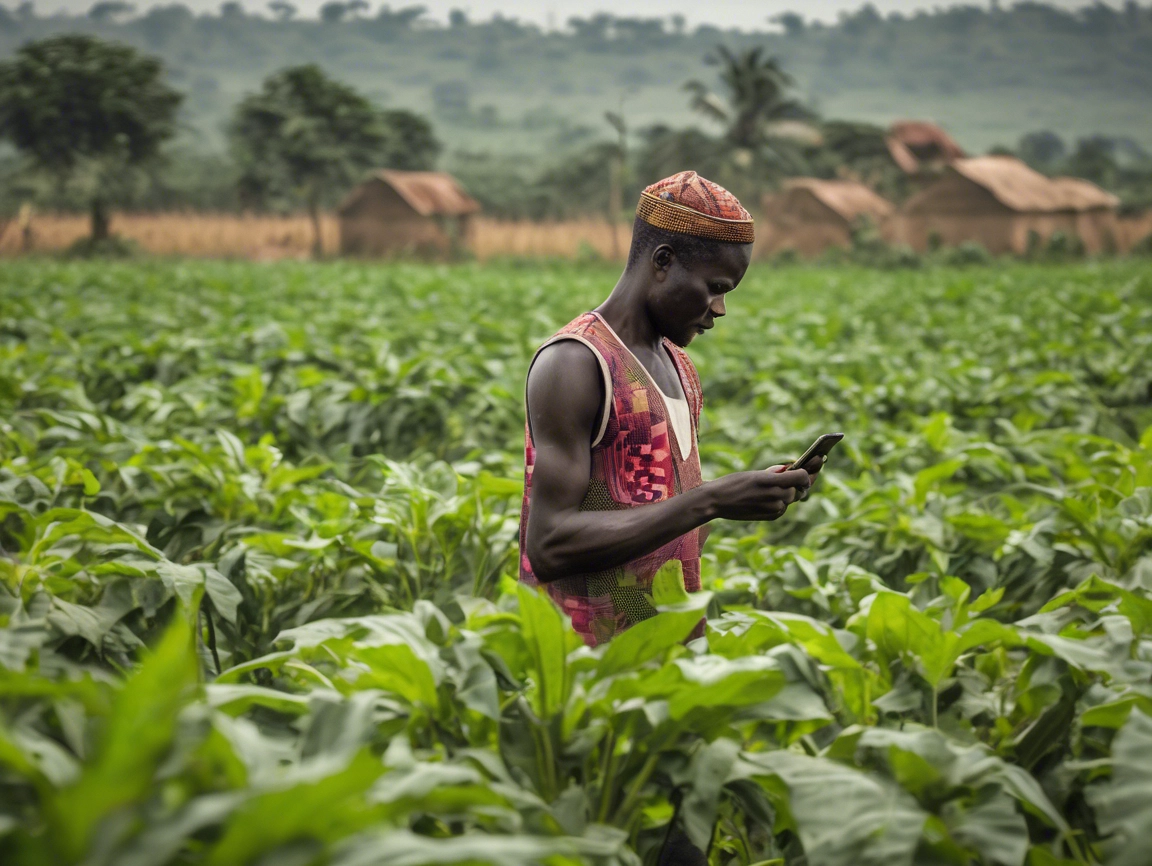
In the heart of rural Ghana, where smallholder farmers form the backbone of the nation’s food security, a groundbreaking innovation is transforming how crops are protected from diseases and pests. The Okuafo Foundation, established in 2018, has developed an AI-powered mobile application that’s helping over 30,000 farmers reduce crop losses by up to 50% – all while working completely offline.
The Challenge: Food Security in Rural Ghana
Ghana, like many African nations, faces significant agricultural challenges. With over 70% of the population dependent on agriculture for their livelihoods, crop diseases and pest infestations pose a constant threat to food security and farmer incomes. Traditional methods of disease identification often rely on expensive agricultural extension services or require farmers to travel long distances for expert consultation.
The statistics are sobering: crop losses due to diseases and pests can reduce yields by 20-40% annually, directly impacting the livelihoods of millions of smallholder farmers across West Africa. This challenge becomes even more acute in remote areas where internet connectivity is limited or non-existent.
Enter Okuafo AI: A Game-Changing Solution
The Okuafo AI mobile app represents a revolutionary approach to crop disease diagnosis. Using advanced image recognition technology trained on over 100,000 crop images, the application can accurately identify diseases and pest infestations in real-time – without requiring an internet connection.
Key Features of the Okuafo AI App:
- Offline Functionality: Works without internet connectivity, crucial for rural areas
- Image Recognition: Uses AI to analyze photos of crops taken with smartphone cameras
- Instant Diagnosis: Provides immediate identification of diseases and pests
- Treatment Recommendations: Offers sustainable pest management solutions
- Local Language Support: Available in local Ghanaian languages
The Technology Behind the Innovation
The Okuafo AI app leverages machine learning algorithms trained on an extensive database of over 100,000 crop images. This comprehensive training dataset enables the app to recognize various diseases and pest infestations with remarkable accuracy. The offline capability is particularly innovative, as it addresses one of the most significant barriers to technology adoption in rural Africa – limited internet connectivity.
The app’s image recognition technology can identify:
- Fungal diseases affecting crops
- Bacterial infections
- Viral diseases
- Various pest infestations
- Nutrient deficiencies
Proven Impact and Recognition
The success of Okuafo Foundation’s innovation has not gone unnoticed. In 2020, the organization became Ghana’s first winner of the prestigious Zayed Sustainability Prize, receiving $600,000 in recognition of their contribution to food security and sustainable agriculture.
Measurable Impact:
- 30,000+ farmers have benefited from the technology
- Up to 50% reduction in crop losses reported by users
- 100,000+ training images in the AI database
- Award-winning recognition from international organizations
The Broader Context: Ghana’s AI Agricultural Revolution
Okuafo Foundation’s success comes at a pivotal time for Ghana’s agricultural sector. In August 2025, Ghana secured a $100 million investment from Japanese company Degas Limited to establish Africa’s first AI-powered agricultural hub. This four-year investment will leverage AI-powered satellite imagery and precision farming to support Ghana’s smallholder farmers, building on the foundation laid by pioneers like Okuafo.
This massive investment demonstrates the growing recognition of AI’s potential to transform African agriculture and positions Ghana as a leader in agricultural technology innovation on the continent.
Sustainable Pest Management: A Core Focus
Beyond disease identification, Okuafo Foundation emphasizes sustainable pest management practices. The app doesn’t just diagnose problems – it provides farmers with environmentally friendly treatment recommendations that:
- Reduce reliance on harmful pesticides
- Promote integrated pest management approaches
- Support long-term soil health
- Protect beneficial insects and biodiversity
Empowering Rural Communities
The Okuafo Foundation’s mission extends beyond technology – it’s about empowering rural farmers with AI-powered solutions to tackle hunger and extreme poverty from the grassroots level. The organization’s approach recognizes that sustainable development must be community-driven and culturally appropriate.
Key aspects of their community empowerment approach include:
- Training programs for farmers on app usage
- Building local capacity for technology adoption
- Collaborating with agricultural extension services
- Developing content in local languages
The Future of AI in African Agriculture
Okuafo Foundation’s success story represents just the beginning of AI’s potential impact on African agriculture. As connectivity improves and smartphone adoption increases across the continent, AI-powered agricultural solutions are poised to transform farming practices for millions of smallholder farmers.
Recent statistics show that AI has already supported over 500,000 smallholder farmers across Africa, improving food security for approximately 2 million households. The technology’s potential to address food security challenges becomes even more critical as the continent faces growing population pressures and climate change impacts.
Challenges and Opportunities Ahead
While Okuafo Foundation has achieved remarkable success, challenges remain in scaling AI agricultural solutions across Africa:
Challenges:
- Limited smartphone penetration in some rural areas
- Need for continuous training data updates
- Ensuring cultural and linguistic appropriateness
- Building trust in technology among traditional farmers
Opportunities:
- Expanding to other crops and regions
- Integration with other agricultural technologies
- Partnerships with government and international organizations
- Development of additional AI-powered farming tools
Lessons for Global Agricultural Innovation
The Okuafo Foundation’s approach offers valuable lessons for agricultural innovation worldwide:
- Local Context Matters: Solutions must be designed for local conditions and constraints
- Offline Capability is Crucial: Technology must work in areas with limited connectivity
- Community Engagement is Essential: Success requires building trust and capacity within farming communities
- Sustainability Focus: Solutions should promote environmentally responsible practices
- Measurable Impact: Clear metrics demonstrate the value of technological interventions
Conclusion: A Model for AI-Driven Social Good
The Okuafo Foundation exemplifies how artificial intelligence can be harnessed for social good, addressing critical challenges in food security and rural development. By developing technology that works offline, speaks local languages, and provides practical solutions to real problems, the organization has created a model that other agricultural innovators can follow.
As Ghana positions itself as Africa’s first AI-powered agricultural hub with the recent $100 million investment, the Okuafo Foundation’s pioneering work provides a strong foundation for continued innovation. Their success demonstrates that with the right approach, AI can truly empower rural farmers and contribute to sustainable agricultural development.
The story of Okuafo Foundation is ultimately one of hope – showing how technology, when thoughtfully applied, can help tackle some of humanity’s most pressing challenges. As the organization continues to expand its impact, it serves as an inspiring example of how AI for social good can transform lives and communities across Africa and beyond.
For farmers interested in learning more about the Okuafo AI app or for organizations looking to partner with the foundation, visit their official website or follow their work through agricultural development networks across West Africa.