
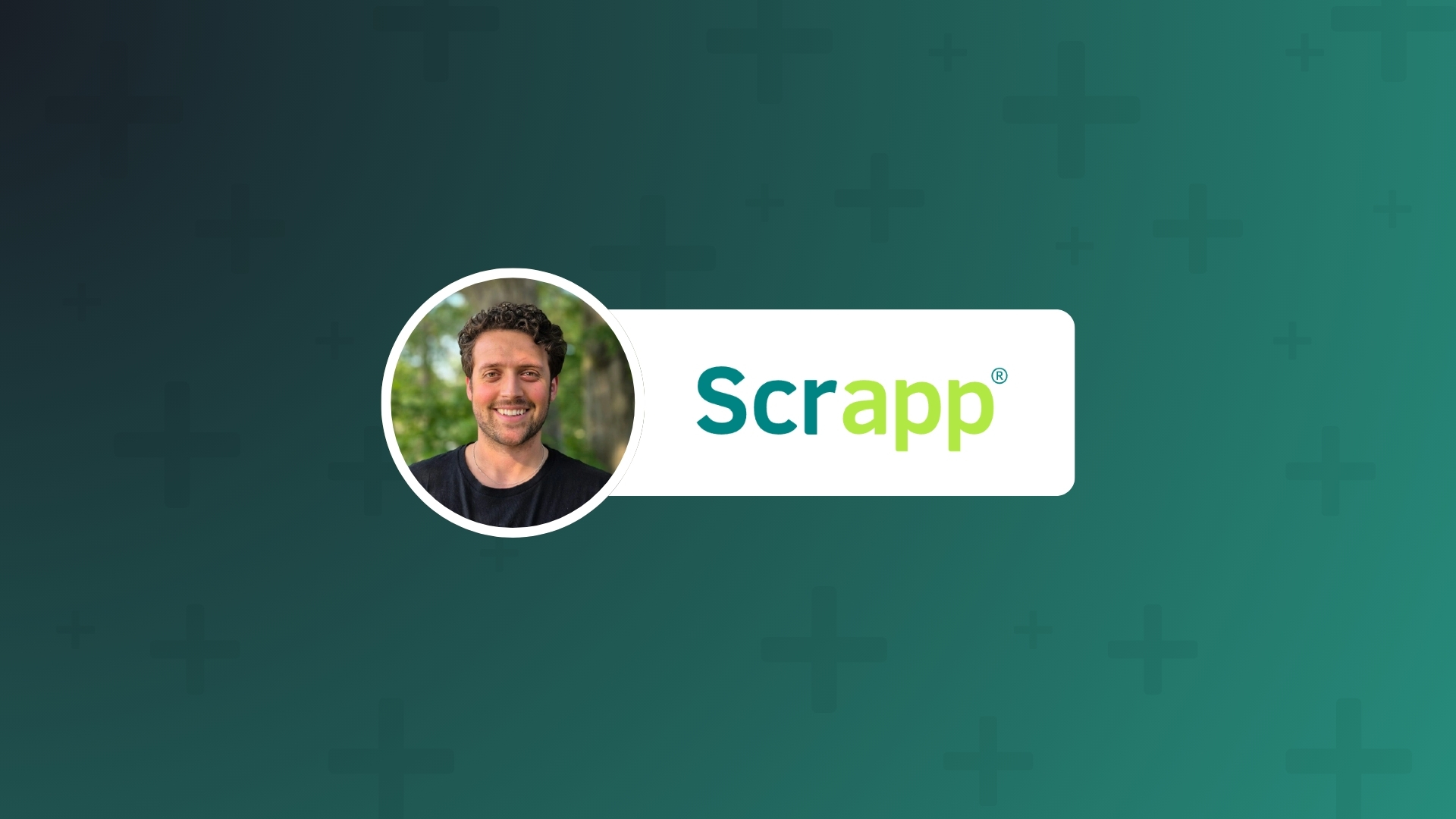
This interview is part of the Impact Interview series, featuring founders building technology for positive impact across People, Health, and Planet.
The World Bank estimates we produce over 2 billion tonnes of household waste annually. A significant chunk of recyclable material ends up in landfill because of contamination and confusion about what goes where.
Scrapp is a UK-based startup using AI and data to help businesses, local governments and citizens reduce waste. Their software recently won the UK Waste and Recycling Partnership of the Year award.
Evan Gwynne Davies is Scrapp’s Co-founder and CEO. The company started as a university project after he and his co-founders kept seeing recycling bins contaminated by plastic bags and greasy pizza boxes. We spoke about why data is the missing piece in the circular economy.
Can you introduce yourself and tell us about your role?
Hello, I’m Evan Gwynne Davies, co-founder and CEO of Scrapp. My role involves all commercial aspects of Scrapp – from marketing content to sales cycles.
Currently, I’m focused on large technology deployments across the US and UK markets. Recently, our software won the UK Waste and Recycling Partnership of the Year award!
How did Scrapp come about and what was the motivation behind it?
In 2019, my co-founders and I all met at university. We noticed the recurring issue of recycling bins being contaminated by items like plastic bags and greasy pizza boxes. Inspired to make a change, we entered a University business competition.
Originally, we conceived the idea of an AI-powered sorting robot but soon realized the scalability challenges. Instead, we shifted our focus to bridging the knowledge gap and empowering people. That’s when we decided to develop the Scrapp app. We learned early on that we weren’t going to solve the waste crisis with the app alone. We needed data. There is a lack of trusted, verifiable waste data, which prevents businesses, local governments and people from reducing the waste they produce. So we took that direction and built Scrapp into what it is today.
“Organising waste data in a simple to digest format helps people and businesses transform how they handle waste. A typically archaeic industry now has the tools to truly treat waste as a resource.”
Evan Gwynne Davies, CEO of Scrapp
Can you describe Scrapp’s mission and values?
At Scrapp, our mission is simple: to reduce waste through better connected data. We achieve this by developing user-friendly recycling tools powered by big data and AI. Our goal is to empower businesses, brands, local governments and citizens to transition to a circular economy and reduce waste.
What are some of the most pressing social issues that Scrapp is working to address through its technology?
One of the most pressing social issues Scrapp addresses through its technology is the staggering amount of household waste generated worldwide. The World Bank estimates that we produce over 2 billion tonnes of household waste annually, equivalent to covering New York Central Park with trash extending a kilometer into the sky. Unfortunately, 94% of this waste ends up in developing countries, landfills, and our oceans every year.
A significant contributor to this problem is global waste contamination, which results in valuable materials like recyclables, compost, and paper being discarded in landfills.
When we started Scrapp, we recognized the lack of technology/data to connect all stakeholders in the circular economy transition. That’s why our focus lies in empowering all stakeholders that create waste to track, monitor and reduce their waste in real-time.
By addressing these challenges, Scrapp aims to reduce waste, preserve valuable resources, and promote a more circular future.
How does Scrapp measure the impact of its work in creating positive change?
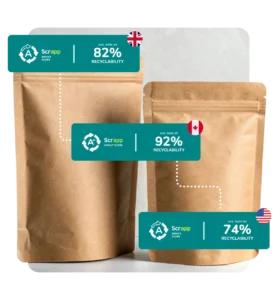
Our guidance and tools currently reach millions of people in the UK, USA, and Canada. Each time someone uses Scrapp to recycle correctly, we can quantify the amount of landfill saved and the corresponding reduction in CO2 emissions. For example, did you know that correct disposal practices for an average city can save up to 4M tons of CO2 annually?
However, our commitment to creating positive change goes beyond just recycling. With our partners at Plastic Bank, for every item recycled with Scrapp, we are able to remove plastic bottle from nature, making a tangible difference in preserving our ecosystems.
“Waste is a unique opportunity in the sustainability space – it is ultimately a resource. When treated as such, it can be put back into the system and continue to deliver value. Once you burn something, like fossil fuels, it no longer has value and instead causes more harm.”
Evan Gwynne Davies, CEO of Scrapp
By measuring these metrics and actively engaging in initiatives that benefit both the environment and society, we can track and amplify the positive change we’re making through Scrapp.
In your opinion, what impact will technology have in creating a better future?
In my opinion, technology has the power to shape a better future. It enables us to connect, learn and collaborate globally – something we couldn’t do in the early climate activist movements.
Technology optimizes resource allocation, addresses environmental challenges head-on, and promotes efficiency. In the right hands, it can be a force for good but it requires people to step up to the challenge, be resilient in sharing their ideas and work toward a common good.
What advice do you have for other companies looking to use tech for good and positively impact the world?
My advice to others looking to use technology for good and create a positive impact is to start with a clear understanding of your purpose. Simon Sinek talks about this in one of my favourite Ted Talks: “start with why”. This will enable you to create solutions that address real needs. Building a company is hard, and being rooted in a mission helps weather the storms that innovation brings – especially in fluctuating markets like tech for good.
Visit Scrapp to learn more.
Evan’s framing is useful: waste is ultimately a resource. When treated as such, it can be put back into the system. The challenge is connecting all the stakeholders who need to make that happen, and that’s a data problem before it’s anything else.
Scrapp recently pitched in the Super Connect Series (AI / GovTech) session powered by Empact Ventures in partnership with Inspire People and supported by Global Good.