
Dementia care is almost entirely reactive. By the time someone qualifies for treatment, the window where intervention could have made a real difference has usually closed.
The Lancet Commission’s 2024 research found that up to 45% of dementia cases are potentially preventable by acting on modifiable risk factors earlier in life. But almost nothing exists for people in that window who are healthy, at-risk, and wanting to act.
OneCarbon is a Cambridge-based synthetic biology startup trying to fill that gap. They used AI to identify the biological pathways that keep neurons resilient with age, then engineered probiotics to support those pathways. The result is a product with a defined mechanism of action, early human data, and a cost structure designed to reach people at population level.
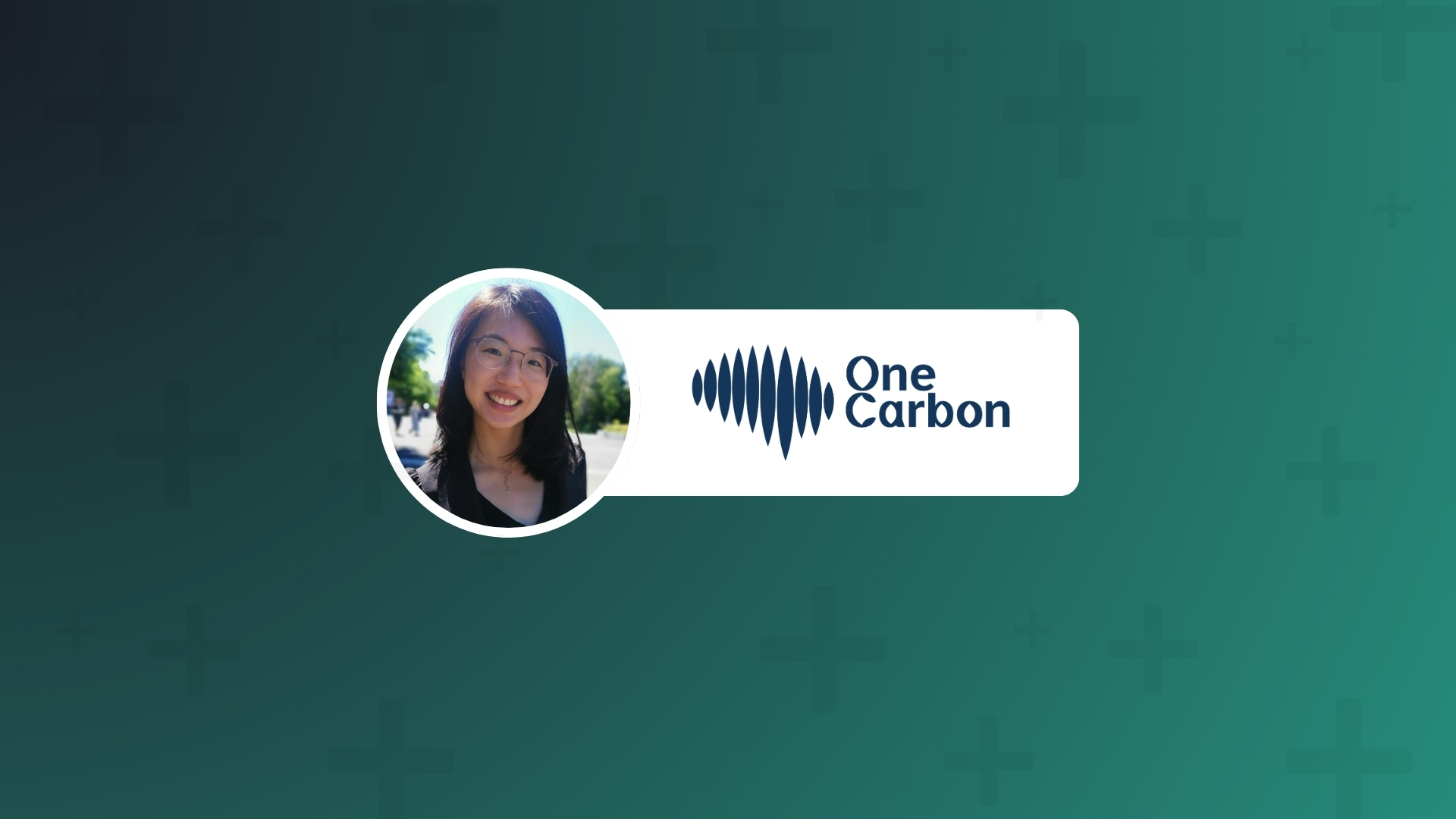
Civia Chen is OneCarbon’s Co-Founder and Chief Scientific Officer. Her route into the space was personal: watching her grandparents lose a little sharpness each year and having nothing meaningful to offer. We spoke about what they’re building, how they measure impact, and why good science turned out to be the easy part.
Can you introduce yourself and tell us about your role?
My name is Civia Chen, Co-Founder and CSO at OneCarbon, a Cambridge-based synthetic biology start-up developing engineered probiotics to support brain health and resilience in early cognitive decline.
Our team is still very small, so my day-to-day can require wearing many different hats. My main priority now is to cement the path from lab science toward commercialisation. On some days, I get to stay close to the science and my wheelhouse: driving the mechanistic research that underpins our lead candidate, 1C-01. On other days, I am thrown into the deep end, figuring out how best to communicate what we have discovered to clinicians, patients, and the public. This often means refining claims to match our evidence, working through regulatory language, and preparing materials for our clinical trials and consumer engagement. Right now, a lot of my time goes into the Early Access Programme (which we are hoping to launch soon) and thinking through how we gather meaningful feedback while maintaining scientific rigour.
What excites me most is the opportunity to take something that works in the lab and actually get it into the hands of people who need it. We have a really clear mechanism of action, robust preclinical data, and early signals in humans. But the real challenge now is translating that into something clinically and commercially viable
How did your company come about and what was the motivation behind it?
My story started close to home. My grandparents are still with us, but I have watched them lose a little sharpness each year, and there is a particular helplessness in noticing it happen and not having anything meaningful to offer. That feeling stuck with me.
This “transition window” is exactly where interventions can make a bigger difference. Everyone knows prevention matters, and people are turning to diet and exercise, but there are very few options with real mechanistic science behind it aimed at people before symptoms take hold.
Around this time, the NHS shifted its policy toward prevention and healthy ageing. Suddenly the timing is now ripe. So we founded OneCarbon to build the thing I wished I could have given my own family: something science-backed, for people who want to act while it still counts.
Can you describe your company’s mission and values?
What makes us different is that we sit between two worlds that rarely meet. Most of what exists is either clinically credible but locked behind diagnosis and prescription, or accessible but scientifically thin. We are building something with a real mechanism of action and clinical evidence behind it, aimed at people who want to act while it still counts.
Our vision is a safe, early, and effective treatment to delay or alleviate the progression of Alzheimer’s disease. Our mission is to help people protect their brain health before decline takes hold, with something backed by real science.
Our values that are central to everything that we do are:
Evidence before claims: We only say what our data supports. In a space full of supplements making promises they cannot back up, we hold ourselves to a higher bar, even when it means claiming less than we might like to.
Accessible by design: A solution that only the wealthy can afford does not solve the problem. Our approach is built to be low-cost and scalable, so it can reach people at population scale.
Honesty with the people we serve: We are straight with patients and families about what we know and what we do not yet know. Trust matters more than a stronger sell.
What are some of the most pressing social issues that your company is working to address through its technology?
The core issue is that dementia care is almost entirely reactive. Over 60 million people live with dementia worldwide, yet the vast majority of resources go into managing the disease once it has already taken hold, when options are limited, expensive, and modest at best.
What makes this urgent is that so much of it is avoidable, or at the very least delay-able. The 2024 Lancet Commission found that up to 45% of dementia cases are potentially preventable by acting on modifiable risk factors earlier in life. There is a real window before decline becomes clinical where intervention can make a meaningful difference, and it is underserved.
Our approach is to make that window actionable. We used AI to identify the biological pathways that keep neurons resilient with age, then engineered probiotics to support those pathways. This gives us something with a defined mechanism of action, rather than a generic supplement, delivered in a form that is low-cost and scalable enough to reach people at population level.
Existing options tend to sit at two extremes: clinically credible interventions locked behind diagnosis and prescription, or accessible supplements with little real science behind them. There is very little aimed at healthy, at-risk people that is both evidence-based and genuinely affordable. That is exactly where we are focused, and it matters because even modest delays in cognitive decline translate into enormous benefit, both for families and for stretched health systems like the NHS.
How does your company measure the impact of its work in creating positive change?
We tie impact measurement directly to the scale of the problem. Up to 45% of dementia cases could potentially be prevented or delayed, and reaching the people in that window is ultimately what success looks like for us.
We want to measure success in three ways:
Measurable biological impact: Most products in this space rely entirely on how people say they feel. Because ours is built on a defined mechanism, we can track objective biomarkers instead. In our pilot study we already confirmed two things directly: that our probiotic establishes in the gut, and that it drives a measurable rise in the target metabolites in the blood. Our long term ambition is for every claim we make to rest on that kind of objective readout, not on anecdote.
Meaningful in everyday life: A biomarker only matters if it translates into something a person feels. So alongside the biology, we track whether the product makes a real difference day to day: memory, focus, sleep, and general sharpness, the things people and their families actually notice. Our Early Access Programme is built partly as a listening tool for exactly this, and our upcoming trial measures cognition and wellbeing directly. The biology tells us whether it works; this tells us whether it is worth it to the person taking it.
Reaching those who need it most: Impact for us is about who we reach, not just how many. Dementia does not fall evenly, and much of the burden sits with communities historically underserved by prevention. Because our approach is designed to be low-cost and scalable, we will measure ourselves partly on how well we reach the people most at risk, rather than only those already paying close attention to their health.
In your opinion, what impact will technology have in creating a better future?
I am cautiously optimistic about how technology could accelerate innovation and help build a better future.
The pattern I find most exciting is the move from reactive to preventive. For most of history, medicine has waited for something to go wrong and then tried to fix it. We are finally getting the tools to act much earlier, and that shift matters most in exactly the chronic, ageing-related conditions we have been worst at treating, like dementia.
AI is the biggest driver of that shift. In our field, it lets us find biological patterns across enormous, messy datasets that no human could hold in their head, and turn those patterns into something targeted. That is what took us from a broad question about brain ageing to a specific, testable mechanism. The same approach is compressing timelines across drug discovery and diagnostics more generally. But a pattern is only a starting point. It still has to be validated, and that is where the real work lies.
That is also why none of this is good by default, and dementia is a field that attracts overpromising. AI can produce confident nonsense as easily as insight, and the flood of science-free supplements making bold cognitive claims is already a version of that: technology used to market faster rather than understand better. The tool is only as good as the discipline, rigour and honesty around it.
So I am genuinely hopeful, but the better future is not automatic. It comes from pairing these powerful new tools with the integrity to only claim what the evidence supports.
What advice do you have for other companies looking to use technology for good and create a positive impact in the world?
Most of our hardest lessons have had nothing to do with the science. It was everything around it that caught us out. So this is less advice from a position of mastery and more a couple of things I wish someone had told me two years ago.
Ask for help embarrassingly early: I have lost more time than I would like to admit being stuck on something, certain it was hard, only to realise the blocker was something obvious I had overcomplicated or simply never done before. A five-minute conversation with the right person would have saved me weeks. Technical founders in particular treat needing help as a failure, or that you’re cutting corners. Ask sooner than feels comfortable.
Good science is the bare minimum, not the finish line: As a scientist by training, this is the one that genuinely surprised me. We assumed the science would be the hard part, and in a way it was the most solved, highest certainty component. The real challenge, and the thing that actually decides whether you make an impact, is the human side: whether you are building something people actually want. Understanding real consumer behaviour, what makes someone act, what makes them stick with it, is harder and more valuable than another data point in the lab. If I were starting again, I would invest in innovating alongside the people we most want to serve far earlier.
The encouraging news is that the bar for combining real rigour with genuine usefulness is far lower than you would expect, because few people do both. If you can hold both, and stay genuinely close to the people you are building for, you stand out almost by default. That gap is not a frustration, it is the opportunity.
—
“Good science is the bare minimum, not the finish line.”
Civia assumed the science would be the hard part. It wasn’t. The real challenge is understanding what makes someone act, what makes them stick with it, and whether you’re building something people actually want.
OneCarbon has early data showing their probiotic establishes in the gut and drives a measurable rise in target metabolites in blood. Whether it translates into something people feel is the next question.
You can find out more about OneCarbon at onecarbon.com.
This interview is part of the Impact Interview series, produced in partnership with Empact Ventures and the Alzheimer’s Society Innovation Programme.
Global Good covers technology built for positive impact across People, Health, and Planet. If you would like to be featured in an Impact Interview, get in touch at globalgood.tech.