
The Lancet Commission’s 2024 research landed on a number that should have changed everything: up to 45% of dementia cases are potentially preventable through modifiable lifestyle factors. Fourteen risk factors, from sleep and hearing health to social connection and physical activity.
However, most people have never heard of it. The science sits in journals and specialist clinics while millions wonder whether their forgetfulness is something to worry about.
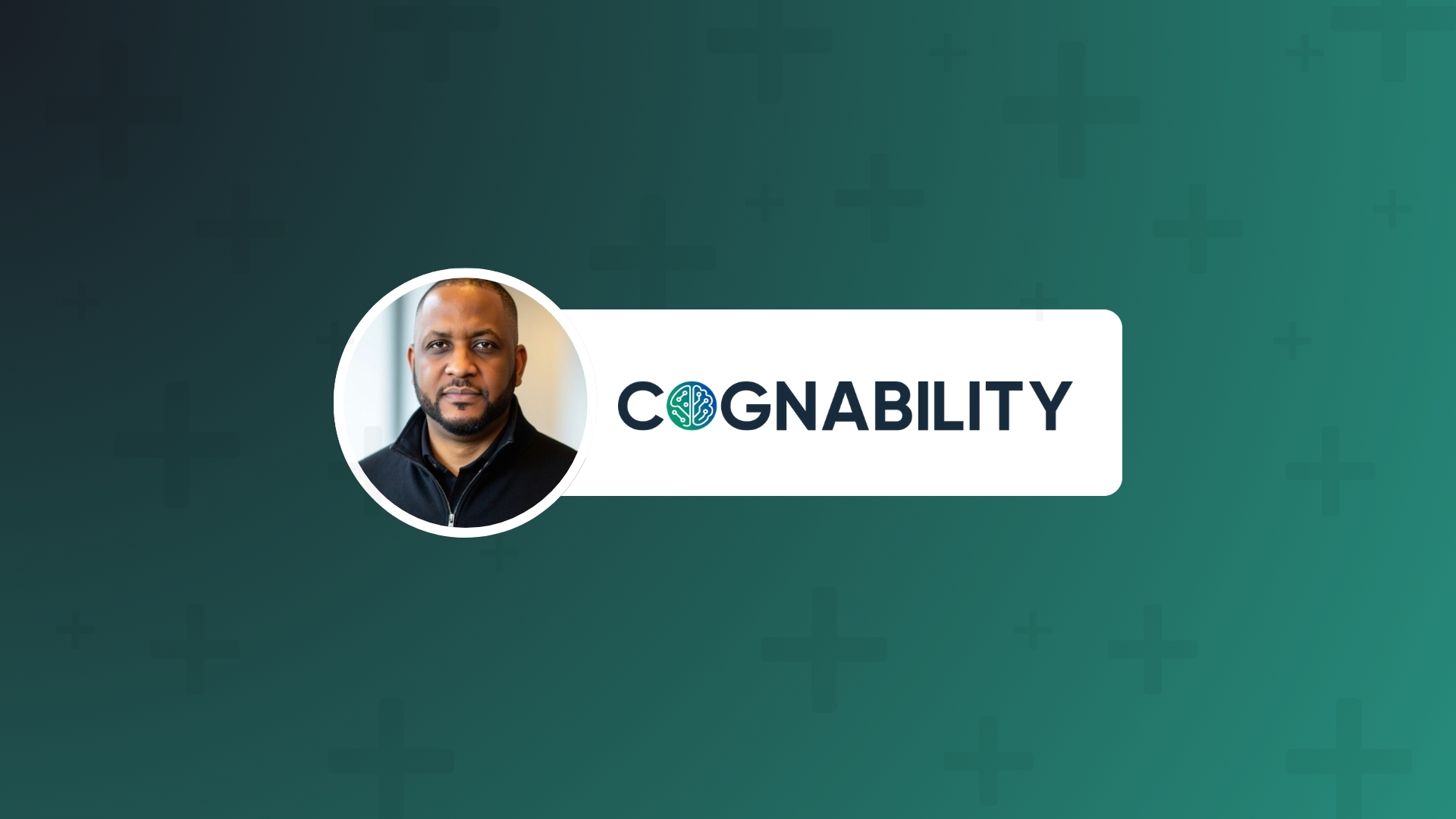
Dipo Olagbegi spent 25 years building digital products before co-founding Cognability, a cognitive health platform designed to close that gap. The motivation to build Cognability was personal, watching a close family member’s cognitive decline and feeling the helplessness that comes with not knowing what’s normal, what to do, or whether acting sooner would have made a difference.
Cognability is built on the Lancet research, designed for communities that digital health tools typically underserve, and includes support for caregivers from day one.
We spoke to Dipo about what he’s building, who it’s for, and why trust is the thing that matters most.
Can you introduce yourself and tell us about your role?
I’m Dipo Olagbegi, co-founder of Cognability, a science-backed cognitive health platform that helps people understand and act on their dementia risk.
How did your company come about and what was the motivation behind it?
My journey into this space started at home. I watched a close family member experience cognitive decline and felt the helplessness that so many families feel not knowing what was normal, not knowing what to do, and wondering whether acting sooner could have made a difference. That experience stayed with me.
When I discovered that up to 45% of dementia cases are potentially preventable through modifiable lifestyle factors backed by the Lancet Commission’s 2024 research, I couldn’t understand why there wasn’t an accessible, trustworthy tool helping people act on that science. So we decided to build one.
By background, I’m a product leader and digital transformation consultant with over 25 years of experience building and scaling digital products. I bring that expertise to Cognability every day , making sure we build something that is not just scientifically credible, but genuinely usable by the people who need it most
Can you describe your company’s mission and values?
Our mission is simple: to make cognitive health as mainstream as physical fitness.
We believe that if people knew dementia was largely preventable, and had an accessible, trustworthy tool to act on that knowledge, many more would take steps to protect their brain health long before symptoms appear. Cognability exists to close that gap.
Our values shape everything we build:
- Evidence over hype. The brain training industry has a credibility problem ,apps making claims the science doesn’t support. We build on peer-reviewed research, specifically the Lancet Commission’s 2024 findings, and we won’t promise what we can’t stand behind.
- People before technology. The best digital health tool is one that genuinely serves the person using it. Every design decision starts with the user — whether that’s a 45-year-old worried about their family history, or a caregiver trying to support someone they love.
- Inclusion by design. Dementia doesn’t affect everyone equally. We are committed to building something that works for diverse communities, not just those who are already health-literate or digitally confident.
Responsibility in everything. When you’re handling people’s health data and speaking to their deepest fears about ageing, trust isn’t optional. We take our ethical obligations seriously at every stage of development.
What are some of the most pressing social issues that your company is working to address through its technology?
Dementia is one of the most pressing health and social crises of our time and yet it remains one of the least talked about in the context of prevention.
There are several deeply interconnected issues we are working to address:
- The prevention gap. Up to 45% of dementia cases are potentially preventable through modifiable lifestyle factors, according to the Lancet Commission’s 2024 research. Yet most people have no idea dementia risk can be influenced by how they live. There is a profound disconnect between what the science tells us and what reaches everyday people in an actionable way. Cognability exists to close that gap.
- Health inequality. Dementia does not affect everyone equally. People from lower socioeconomic backgrounds, certain ethnic communities, and those with less access to healthcare face disproportionately higher risk — and far fewer resources to act on it. We are committed to building a tool that is accessible and relevant across diverse communities, not just those who are already health-literate.
- The invisible burden on caregivers. Behind every person living with dementia is a network of family members and unpaid carers carrying an enormous emotional and financial weight. One in three unpaid carers in the UK spends over 100 hours a week caring. We built caregiver support into Cognability from day one ,because prevention and support are two sides of the same coin.
- A healthcare system under unsustainable pressure. Dementia costs the UK £42 billion annually , a figure projected to more than double to £90 billion by 2040. The NHS cannot absorb that trajectory without meaningful intervention at the prevention layer. Cognability sits precisely in that space; empowering people to act before they ever need clinical care
How does your company measure the impact of its work in creating positive change?
Our vision for impact measurement is tied directly to the scale of the problem we are trying to solve ;up to 440,000 people in the UK whose dementia could potentially be prevented or delayed.
Ultimately, we want to measure success in three ways:
- Behaviour change at scale. The Lancet Commission identifies 14 modifiable risk factors for dementia ; things like physical activity, social connection, sleep, hearing health and blood pressure management. Our long term ambition is to track whether sustained engagement with Cognability leads to meaningful, measurable improvement across those factors in our users’ lives. That is the outcome that matters most.
- Reaching those who need it most. Impact for us is not just about numbers , it is about who we reach. We will measure our success partly by how well we serve communities that are disproportionately affected by dementia but historically underserved by digital health tools.
- Relieving caregiver burden. We will track whether our caregiver tools genuinely reduce the isolation and anxiety that families experience , because supporting those around someone at risk is as important as supporting the individual themselves.
- Contributing to the evidence base. As we scale and build clinical partnerships, we want Cognability to contribute to research that demonstrates the real world impact of accessible, science-backed prevention tools on cognitive health outcomes.
Right now we are in our early pilot phase, laying the measurement foundations carefully ,because we believe the only impact worth claiming is impact you can actually demonstrate
In your opinion, what impact will technology have in creating a better future?
Technology has an extraordinary opportunity in the dementia space , but only if we use it with honesty and humility.
For too long, the conversation around dementia has been dominated by two narratives: the search for a cure, and the management of late-stage care. Both matter enormously. But technology can now open a third conversation ; one about prevention at a scale that was simply not possible before.
What excites me most is democratisation. The science of dementia risk has existed in academic journals and specialist clinics for years. Technology can take that knowledge and put it in the hands of someone sitting at home in the evening, wondering whether their forgetfulness is something to worry about. That shift from knowledge locked away in institutions to knowledge that empowers individuals is genuinely transformative.
Wearables, AI and digital platforms can also do something clinicians alone cannot: they can be present in someone’s daily life consistently, over months and years, spotting patterns and nudging behaviour in ways that a fifteen minute GP appointment never could. The potential to support early identification and sustained lifestyle change at a population level is real.
But I want to be careful here. Technology in healthcare carries serious responsibilities. The brain training industry has already shown us what happens when commercial incentives outpace scientific integrity. For technology to create a genuinely better future in dementia prevention, it must be built on solid evidence, developed with the communities it serves, and held to rigorous ethical standards.
Done right, I believe technology can help shift dementia from something that happens to people, to something that more people have the knowledge and tools to actively work against
What advice do you have for other companies looking to use technology for good and create a positive impact in the world?
Twenty- Five years of building digital products and two years of building Cognability have taught me some hard lessons about what it actually takes to use technology for good. Here is what I would pass on.
Start with the problem, not the technology. It sounds obvious but it is the most common mistake I see. Founders fall in love with what the technology can do before they truly understand the human problem they are solving. In dementia prevention, the technology is the easy part. Understanding why people don’t act on health information they already have i.e the fear, the fatalism, the confusion( that is the hard part). Spend more time there than you think you need to.
Earn the right to speak to your audience. We spent significant time talking to people living with dementia, caregivers and adults worried about their cognitive health before we wrote a single line of code. That is not a nice-to-have , it is the foundation everything else is built on. If the people you are trying to help don’t recognize themselves in your solution, you have built the wrong thing.
Be honest about what you know and what you don’t. The tech for good space attracts a lot of good intentions but good intentions without rigour can cause real harm, especially in health. Be precise about your claims. Build on evidence. Say clearly what your product can and cannot do. Trust is the most valuable thing you have and the easiest to lose.
Don’t build alone. Some of our most important insights have come from conversations with clinicians, researchers, other founders and most importantly the communities we serve. Collaboration is not a weakness , it is how you build something that lasts.
And finally , stay close to your why. Building something meaningful is hard. There will be moments of doubt, rejection and frustration. The founders I have seen sustain impact over time are the ones who never lose sight of the human story at the heart of what they are doing. For me, that is my family member’s experience. That never leaves the room.
—
Dipo’s line about earning the right to speak to your audience is the one I keep coming back to. Cognability talked to people living with dementia, caregivers, and adults worried about their cognitive health before writing a single line of code. That is how you build something people recognise themselves in.
You can find out more about Cognability at cognability.com
This interview is part of the Impact Interview series, produced in partnership with Empact Ventures and the Alzheimer’s Society Innovation Programme.
Global Good covers technology built for positive impact across People, Health, and Planet. If you would like to be featured in an Impact Interview, get in touch at globalgood.tech.