



Welcome to Global Good’s Impact Interview series, which shares the stories of people and companies working to drive positive change in society.
Can you introduce yourself and tell us about your role?
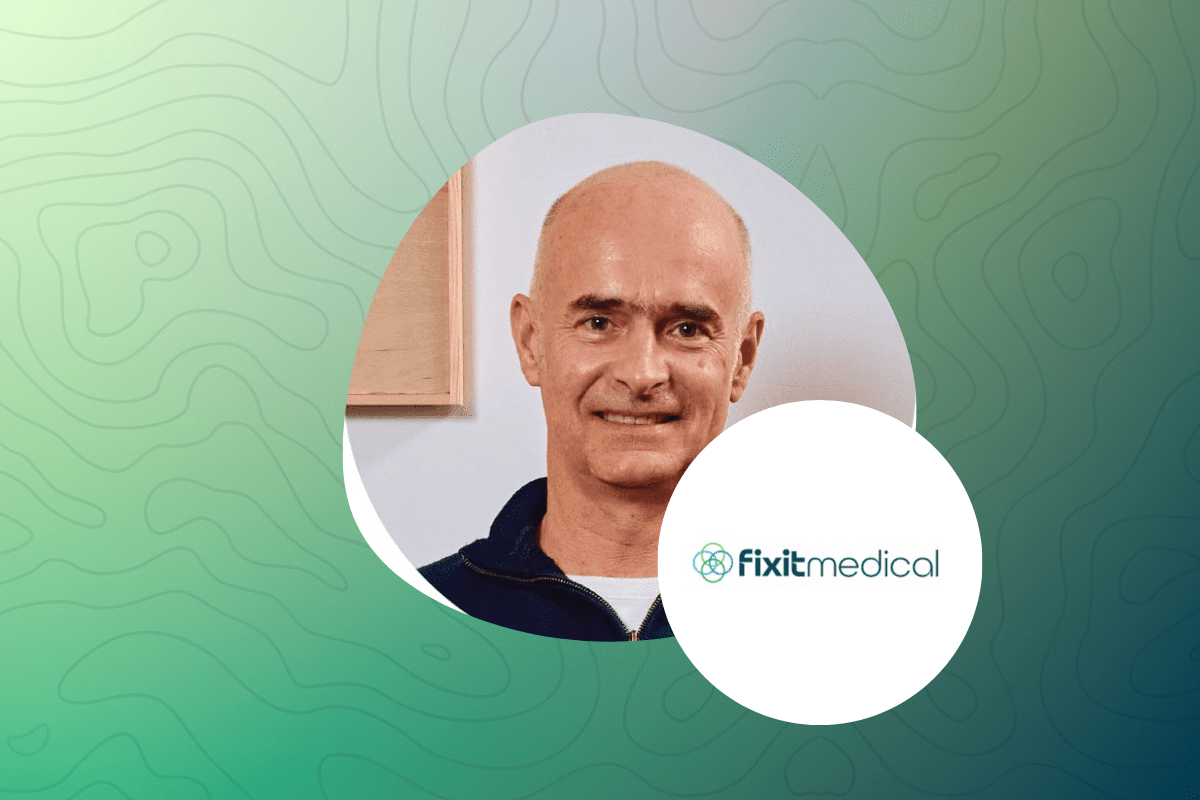
I am a Consultant Interventional Radiologist by profession, with most of my career spent working in the NHS. My clinical work involved complex, often life-saving procedures, but it also gave me clear visibility of what happens to patients once treatment is over and they return to everyday life. That perspective has shaped everything I do now.
I am the founder of Fixit Medical and the inventor of Cingo™, a catheter securement device designed to address one of the most persistent yet overlooked problems in modern healthcare: preventable device failure after otherwise successful treatment. My role spans clinical leadership, product development, and clinical evaluation, ensuring decisions are grounded in real patient experience rather than theoretical assumptions.
At Fixit Medical, I bring frontline clinical insight into every stage of development — from identifying unmet needs, to challenging entrenched practices, to testing whether a solution genuinely improves outcomes. I see my role not simply as an innovator, but as a clinician advocating for safer, more humane care, recognising that every improvement we make today is something we may rely on ourselves in the future.
How did your Fixit Medical come about, and what was the motivation behind it?
Fixit Medical emerged directly from repeated clinical frustration. Despite extraordinary advances in imaging, minimally invasive techniques, and precision medicine, some fundamental aspects of care remain rooted in tradition rather than evidence. One of the clearest examples was how percutaneous drainage catheters were secured.
Repeatedly, I saw patients experience avoidable complications because their catheter became dislodged due to inadequate fixation. These events caused pain, infection, emergency readmissions, and often a profound loss of confidence and independence. What made this particularly troubling was that the problem was widely accepted as inevitable, rather than solvable. The motivation behind Fixit Medical was to challenge that assumption. I believed there had to be a better way — one that reflected modern expectations of safety, hygiene, and quality of life.
That belief led to the invention of Cingo™, a device designed from first principles to redistribute forces, protect the catheter, simplify nursing care, and allow patients to shower and live more normally. The company was founded to turn that conviction into a practical, scalable solution that improves care while reducing unnecessary burden on healthcare services.
Can you describe your company’s mission and values?
Fixit Medical’s mission is to improve patient safety, dignity, and independence by addressing overlooked problems in everyday healthcare. We focus on areas where outcomes are compromised not by lack of technology, but by reliance on outdated practices that persist through habit and dogma. Our core value is clinical authenticity. Every product we develop begins with a genuine unmet need observed in practice and is shaped by what truly matters to patients and clinicians. We value courage — the willingness to question accepted norms and push for change when evidence and experience show that better is possible.
Patient-centred design sits at the heart of our approach. That means prioritising comfort, hygiene, and independence alongside clinical performance, and recognising that reducing complications benefits both patients and the sustainability of healthcare systems. We are also guided by persistence and integrity. Innovating in healthcare is slow and often resistant to change, but if something can meaningfully improve patient care, we believe there is a responsibility to pursue it rigorously and responsibly.
Ultimately, our values reflect a simple truth: what we build today is the healthcare we — and those we care about — may depend on tomorrow.
What are some of the most pressing social issues that your company is working to address through its technology?
One of the most pressing issues we address is preventable harm caused by medical devices failing outside controlled clinical environments. Catheter dislodgement may sound minor, but its consequences — infection, repeat procedures, emergency admissions, and loss of independence — carry significant human and economic costs. Another key issue is inequity of care in the community. Patients living with long-term drainage catheters often depend heavily on frequent nursing visits, limiting independence and placing strain on already stretched services. Poor fixation disproportionately affects frail patients and those managing complex illness at home.
Fixit Medical also addresses inefficiency driven by outdated practices. Healthcare systems invest heavily in advanced procedures, yet often accept avoidable downstream complications as unavoidable. This leads to wasted resources, clinician burnout, and poorer patient experience. By improving securement and durability, our technology aims to reduce complications, enable simpler community care, and give patients confidence to live more normally — including showering and moving freely. In doing so, we help shift care from reactive crisis management to prevention-focused, dignity-centred support.
How does your company measure the impact of its work in creating positive change?
We measure impact through outcomes that matter to patients, clinicians, and healthcare systems. Clinically, this includes reductions in catheter dislodgement, infection risk, emergency readmissions, and repeat procedures — clear markers of safer care. Quality-of-life outcomes are equally important. We assess comfort, confidence, ability to shower, and reduced reliance on frequent nursing visits — factors that are often under-measured but central to wellbeing.
From a system perspective, we evaluate reductions in community nursing workload, fewer unplanned hospital visits, and overall cost savings from avoided complications. These metrics demonstrate that improving patient experience and improving efficiency are not competing goals. We also place strong value on qualitative feedback from patients and clinicians, using it to refine design and usability. Impact is not just about numbers, but about whether a solution genuinely integrates into real-world care.
In your opinion, what impact will technology have in creating a better future?
Technology has enormous potential to improve healthcare, but only if applied thoughtfully. Many of the greatest gains will not come from increasing complexity, but from re-examining everyday practices that persist largely through tradition. Medicine now embraces extraordinary sophistication in diagnosis and treatment, yet often tolerates outdated tools and methods in basic care delivery. The real opportunity lies in closing that gap — applying modern design, materials, and evidence-based thinking to problems that directly affect daily patient experience.
When innovation is grounded in genuine need, technology can shift healthcare from reactive intervention to prevention, restoring independence, dignity, and trust for patients. Ultimately, technology should support care rather than distance us from it — enabling clinicians to focus on people, not problems that should have been solved long ago.
What advice do you have for other companies looking to use tech for good and positively impact the world?
Start with a real problem, not a clever solution. Spend time understanding where people are being failed by accepted practices, and question whether those practices persist because they work — or because they are familiar. Have the courage to challenge dogma. Many harms exist simply because “this is how it’s always been done.” If you believe something can be improved, expect resistance and persist with evidence, integrity, and patience.
Design for the end user, not the system alone. In healthcare, that means patients first, but also clinicians who must use and trust the technology every day. Finally, don’t underestimate persistence. Innovation that creates meaningful impact is rarely quick or easy. But if you believe in improving outcomes — remembering that we will all be patients one day — contributing to that change is not just worthwhile; it is a responsibility.
Fixit Medical are part of the Super Connect Series powered by Empact Ventures in partnership with Global Good